A Complete Guide to Wolf Tracks, Scat, Kill Sites and Territory Marking
Learning how to identify signs of the gray wolf (Canis lupus) in the wild is essential for hikers, wildlife trackers, hunters, landowners, and conservationists. Correct identification helps distinguish wolves from domestic dogs and provides insight into wolf behavior, territory, and pack activity.
1. Wolf Tracks
Wolf tracks are the most frequently observed and searched indicator of wolf presence.
Although wolves anatomically have five toes on their front paws, the first toe (dewclaw) sits high and does not register in tracks. As a result, wolf tracks appear four-toed, with clearly visible claw marks.
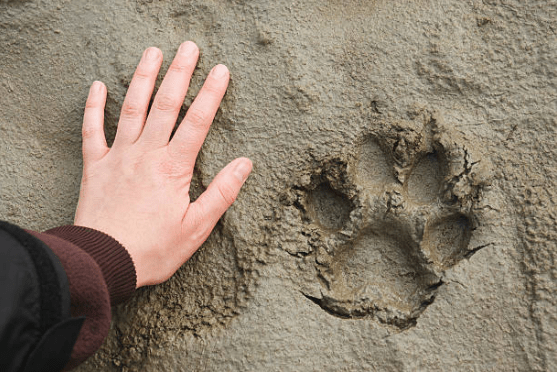
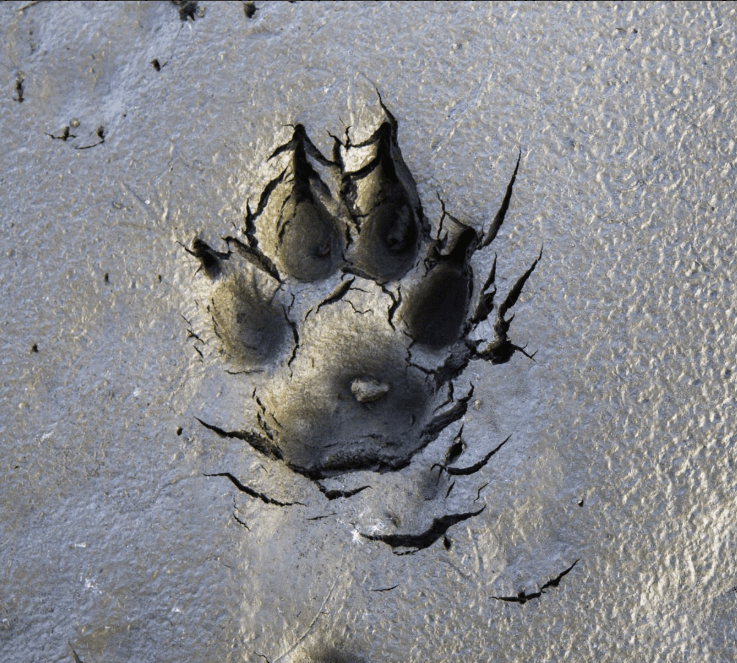
Key Features of Wolf Tracks
- Length (without claws): 7–12 cm
- Four toes with long claw impressions
- Large rear pad positioned relatively far back
- Noticeable negative space between toes and pad
Hind tracks are:
- Narrower
- Longer
- More oval and pointed
Front tracks are:
- Wider
- Larger
- Very similar to large dog tracks
2. Wolf Scat (Droppings)
Wolf scat is one of the most reliable signs when confirming wolf presence.
Typical Characteristics
- Cylindrical shape
- Diameter: 3–4 cm
- Contains visible hair and bone fragments
Appearance by Age
- Fresh scat: Darker color, strong odor
- Very fresh scat: Can occasionally appear lighter
- Old scat: Often looks like a twisted bundle of hair after rain washes away softer material
In comparison, large dog feces:
- Usually light brown
- Rarely contain visible fur or bone fragments
- Often resemble processed kibble remains
Territorial Marking Behavior
Wolves frequently leave scat in visible locations to mark territory, including:
- Forest roads
- Ridge trails
- Trail intersections
They may repeatedly mark the same spot, resulting in scat of different ages from multiple pack members.
3. Wolf Trail Pattern (Track Line Behavior)
The wolf trail pattern is one of the strongest behavioral indicators distinguishing wolves from dogs.
When trotting, wolves move in a highly energy-efficient manner. They place their hind paws directly into the tracks of their front paws — a movement known as direct register.
This creates:
- A single straight line of tracks
- Overlapping prints
- The impression that the wolf is “walking a tight line”
Domestic dogs, by contrast, tend to:
- Zigzag
- Investigate objects
- Leave two slightly separated lines of tracks
Pack Movement in Deep Snow
When multiple wolves travel together in deep snow, they conserve energy by:
- Walking single file
- Stepping into the tracks of the leading wolf
This can make it appear as though only one wolf passed through the area.
Wolves commonly travel along:
- Mountain ridgelines
- Forest roads
- Cleared winter paths
These routes allow efficient movement within their large territories.
4. Wolf Kill Sites and Prey Remains
Another strong indicator of wolf presence is a wolf kill site.
Near feeding areas, you may find:
- Lower jaws
- Legs
- Vertebrae
- Entire heads of prey
- Fresh carcasses
A distinctive sign of wolf feeding is the presence of large bones that have been bitten through.
A single wolf can consume a smaller prey animal (such as roe deer) almost entirely in one night. Smaller pieces of prey may be carried and dropped along travel routes.
In areas where livestock are poorly protected, wolves may target domestic animals, sometimes resulting in multiple losses in a single event.
5. Wolf Resting Sites (Beds)
In winter, following wolf tracks may lead you to resting sites.
These are identifiable by:
- Flattened, partially melted snow
- Circular depressions where a wolf rested curled up
- Occasionally, wolf hairs frozen into the snow
6. Wolf Rendezvous Sites (Pup Gathering Areas)
From April to July, when pups are still small and less mobile, wolf packs use rendezvous sites.
These are:
- Quiet, concealed, or remote areas
- Places where pups rest and interact with adult pack members
Typical signs include:
- Flattened vegetation
- Bone fragments
- Chewed objects (sometimes including plastic debris used by pups to strengthen developing teeth)
How to Confirm Wolf Presence
To reliably confirm wolf presence, combine multiple signs:
- Track size and shape
- Straight trail pattern
- Hair-filled scat
- Kill remains with crushed bones
- Territorial marking behavior
Evaluating these indicators together significantly increases identification accuracy.
 Wolf Tracking